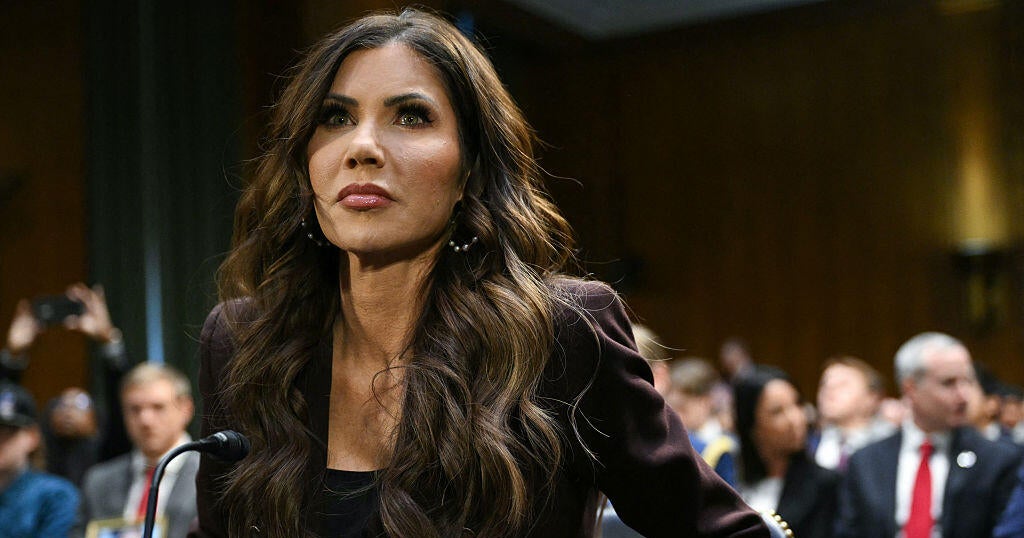
Senate Grills Noem on ICE Tactics & Protestor Controversy
In a tense and often fiery hearing before the Senate Judiciary Committee, Homeland Security Secretary Kristi Noem faced a barrage of questions regarding her department's controversial immigration enforcement tactics and her previous characterizations of protesters killed by federal officers in Minneapolis. The nearly five-hour session saw Noem steadfastly defend her agency and its personnel, pushing back against Democratic criticism with a firm posture that demonstrated her resolve to noem refuse excuses for her department's actions or her past statements.
The hearing marked Noem's first congressional appearance since the Minneapolis shootings galvanized widespread opposition to the Trump administration's aggressive mass deportation agenda. Her testimony illuminated the deep partisan divide over immigration policy, with Democrats accusing her of overreach and misrepresentation, while Noem maintained that her officers were facing dangerous conditions exacerbated by what she called "deliberate mischaracterizations" and rhetoric that demonizes law enforcement.
A Fiery Hearing: Noem Under Scrutiny for ICE Operations
Secretary Noem's appearance was anticipated as a critical moment for the administration's immigration strategy, particularly after the events in Minneapolis cast a harsh light on federal enforcement actions. Critics pointed to her initial portrayal of the two U.S. citizen protesters killed by federal officers as "agitators," a claim that local officials and bystander video accounts widely contradicted. This discrepancy formed a significant point of contention throughout the hearing.
The intensity of the questioning was palpable, with lawmakers like retiring Republican Sen. Thom Tillis of North Carolina not holding back. Tillis, known for his directness, notably labeled Noem's leadership a "disaster," skewering her management of the immigration crackdown and her department's broader emergency response capabilities. Such a strong rebuke from a senator within her own party underscored the widespread nature of the concerns being raised, transcending typical partisan lines on certain aspects of her department's performance.
Noem, however, remained unyielding. She utilized her time to champion the work of her officers, asserting that they operate under increasingly hostile conditions. "I want to address the dangerous environment that our ICE officers face on the streets today," Noem stated, framing the opposition as a direct threat to national security. "They are facing a serious and escalating threat as a result of deliberate mischaracterizations of their heroic work and rhetoric that demonizes our law enforcement." This statement was a clear indication that noem refuse excuses for the officers' methods, instead shifting the blame for public animosity onto activists and critics.
The underlying tension of the hearing was further amplified by the ongoing debate over DHS funding, which remains unresolved in Congress. Noem did not hesitate to blame Democrats for the partial shutdown, describing it as "reckless" and a move that endangered national security. This pointed accusation served to reinforce her position that political obstruction, rather than departmental missteps, was creating obstacles for effective enforcement.
The Minneapolis Controversy: Characterizing the Deceased
Perhaps the most emotionally charged segment of the hearing revolved around the two individuals, Renee Good and Alex Pretti, who were killed by federal agents during protests in Minneapolis. Sen. Peter Welch, D-Vermont, directly challenged Noem, asking if she would apologize to their families for characterizing them as engaged in domestic terrorism. This direct request for an apology highlighted the moral and ethical dimensions of the controversy, pushing Noem to confront the human cost of her department's operations and rhetoric.
Noem’s response was carefully worded. While she offered her condolences, stating, “I certainly offer my condolences to these families for their loss. It’s a tragic situation that we saw in Minneapolis,” she stopped short of issuing an apology for her specific characterizations of Good and Pretti. Instead, she attributed her initial statements to the "chaotic" nature of the days and the information she received from field agents. This clarification, while acknowledging the tragedy, was interpreted by many as a clear instance where noem refuse excuses that would involve retracting her earlier, controversial remarks. She essentially offered an explanation for her previous statements rather than a retraction or an admission of error regarding the protesters' actions.
The administration has, since the deaths in Minneapolis, taken some steps to de-escalate tensions, including drawing down parts of the operation in the city. However, the core strategy of pressing restrictions against both legal and illegal immigration, buying warehouses for detention, and continuing federal enforcement in various parts of the country remains firmly in place. Noem confirmed that approximately 650 investigators remain in Minnesota as part of a broader fraud probe, signaling that while visible operations might have shifted, the underlying enforcement efforts continue unabated. For a deeper dive into her explanations, readers can refer to Noem Blames Chaos for Minneapolis Protestor Portrayals.
Defending the Enforcement: ICE's Dangerous Environment
Central to Secretary Noem's testimony was her staunch defense of Immigration and Customs Enforcement (ICE) and Customs and Border Protection (CBP) officers. She painted a picture of a frontline force operating under immense pressure and facing significant threats, which she argued were compounded by public outcry and what she deemed as unfair criticism. Her argument positioned ICE officers as heroes whose "heroic work" was being undermined by "deliberate mischaracterizations" and "rhetoric that demonizes our law enforcement." This narrative aimed to galvanize support for her department and deflect criticism regarding its methods.
Noem's testimony highlighted the administration's commitment to its mass deportation policy, a centerpiece of President Trump's second term. Despite congressional friction and public protests, her department has continued its robust enforcement activities, including the acquisition of additional facilities for immigration detention. This unwavering commitment, even in the face of significant pushback, again demonstrated that noem refuse excuses that would lead to a softening of enforcement posture. She emphasized the necessity of these actions for national security and the integrity of the immigration system.
The Secretary also reiterated her blame towards Democrats for the unresolved funding issues, calling the partial shutdown "reckless" and a direct threat to national security. This political maneuvering aimed to place the onus of any potential security gaps or operational challenges squarely on her congressional opponents, rather than internal departmental issues or policy decisions. For more context on her defense of these policies, see Kristi Noem Defends Immigration Crackdown Amid Criticism.
Practical Tip: When evaluating statements from government officials during high-stakes hearings, it's crucial to distinguish between expressions of sympathy (like condolences) and outright apologies or retractions. A politician's choice of words can subtly convey their underlying position without explicitly conceding fault.
Beyond the Hearing Room: Implications and Future Outlook
Secretary Noem's testimony extended beyond the immediate issues of ICE tactics and protestor controversies, touching upon broader national security concerns. Her appearance came shortly after a weekend shooting at a Texas bar, then being investigated as a possible act of terrorism, raising concerns about the escalating conflict in Iran and its potential repercussions for security within the U.S. This broader context served to underscore the multi-faceted challenges faced by Homeland Security and provided Noem with an opportunity to frame her department's work as essential for a wide range of threats, not just immigration.
The ongoing clash in Congress over DHS funding remains a critical unresolved issue. While a spending bill passed the previous year provided a significant financial boost for the administration's mass deportation policy, the current impasse signifies deep-seated disagreements about the scope and nature of immigration enforcement. The political battle over funding will likely continue to shape the department's capabilities and operational focus in the coming months, reflecting the nation's struggle to find common ground on immigration.
Insight: The rhetoric used by government officials regarding protests and enforcement activities can significantly impact public perception and social cohesion. When leaders characterize protesters in extreme terms, it can escalate tensions and complicate efforts to find peaceful resolutions. Conversely, a measured tone, even when defending necessary enforcement, can help foster a more constructive dialogue.
The core takeaway from the hearing is that the debate surrounding immigration enforcement is far from settled. With the administration doubling down on its hardline policies and Congress remaining deeply divided, the scrutiny on agencies like ICE and CBP, and leaders like Secretary Noem, will only intensify. The discussion isn't just about borders and laws; it delves into fundamental questions about civil liberties, the role of federal agents, and the right to protest in a democracy.
In conclusion, Secretary Kristi Noem's appearance before the Senate Judiciary Committee was a robust defense of her department's immigration enforcement tactics and her handling of the Minneapolis protestor controversy. Through hours of intense questioning, Noem remained steadfast, offering justifications and condolences, but ultimately demonstrating her resolve to noem refuse excuses for her department's aggressive posture or her previous statements. The hearing underscored the profound partisan chasm over immigration policy and the ongoing challenges of balancing national security with civil liberties, leaving many critical issues unresolved and the national conversation surrounding immigration as contentious as ever.